POS Security and PCI Compliance built into your system
Payments, customer information, and daily operations all depend on a secure foundation.
SuperSonic combines secure payment processing, PCI-compliant infrastructure, encrypted data handling, and operational access controls to help protect sensitive information without making your POS harder to run.
Security works in the background so you can stay focused on running your business.

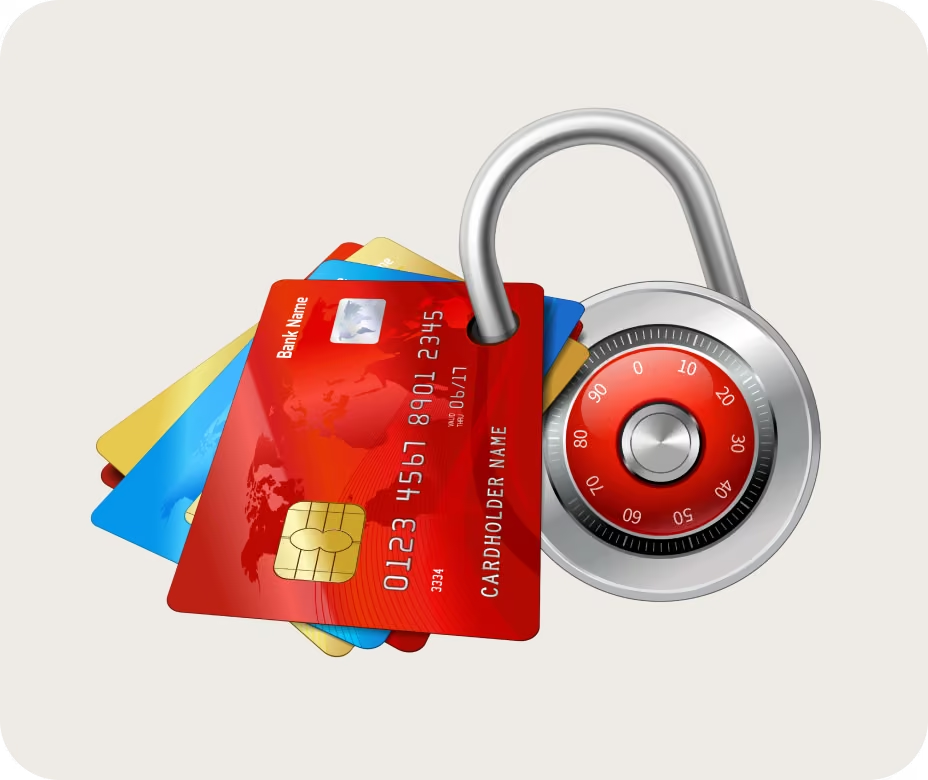
Protect payments without slowing down checkout
Every card transaction involves sensitive payment information. Protecting that data should not mean slowing down your checkout line.
SuperSonic uses secure, encrypted payment processing designed to protect cardholder information as transactions move through the payment system.
Customers can pay quickly. Your team can keep the line moving. Payment security stays built into the process.
Fast checkout. Secure payments. Less to worry about.
PCI-Compliant payment infrastructure
Accepting card payments comes with security responsibilities, but your POS should help make those responsibilities easier to manage.
SuperSonic is a PCI DSS Level 1 Service Provider, the highest service-provider level under PCI DSS validation. SuperSonic's current website also identifies the platform as annually audited.
PCI DSS establishes security requirements for environments that store, process, or transmit payment account data. SuperSonic's payment infrastructure is designed around those requirements to help protect cardholder information throughout the payment process.
Merchants still have responsibilities for maintaining PCI compliance within their own business environment, but choosing secure payment technology can help reduce unnecessary exposure and complexity.
Protect the payment. Simplify the process.
Encrypted transactions and tokenized data
Raw card information should not be exposed unnecessarily during everyday business activity.
SuperSonic uses encryption and tokenization as part of its secure payment environment. Encryption protects sensitive payment information during processing, while tokenization replaces sensitive card data with secure reference values that can be used without repeatedly exposing the original information.
Sensitive payment data stays protected while your team gets the functionality they need.
Control who can access what
Not every employee needs access to every part of your POS.
Giving too many people permission to issue refunds, change pricing, override transactions, or access sensitive reports creates unnecessary risk.
SuperSonic supports role-based permissions so you can control what cashiers, managers, and administrative users are allowed to see and do. Current SuperSonic Cloud functionality includes employee-level tracking and role-based permissions.
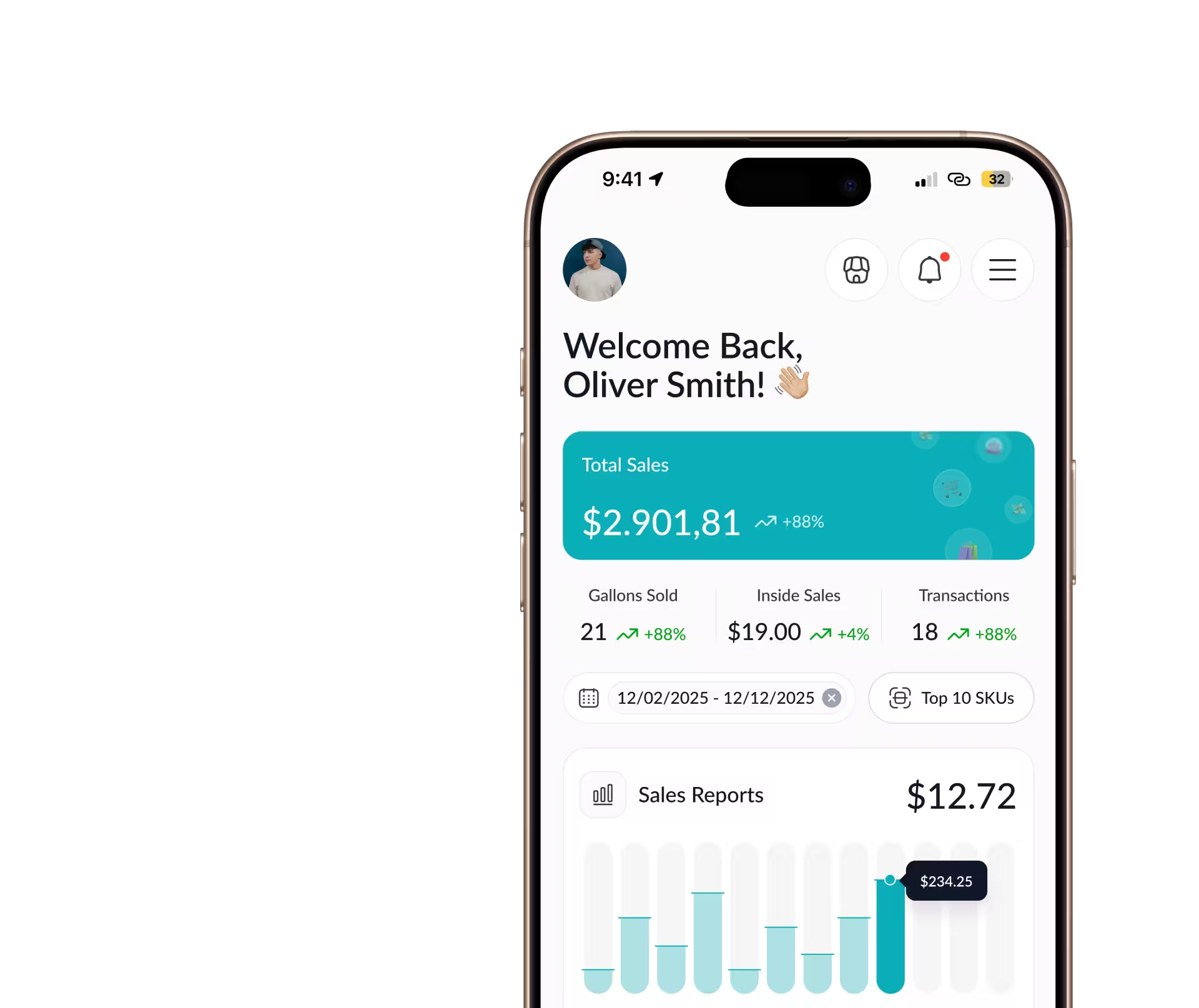
Secure infrastructure for connected commerce
Your POS no longer operates as one isolated register.
SuperSonic uses secure connections across its connected ecosystem to help protect information as it moves between:


Everything works together while security remains part of the connection, not another system you have to manage separately.
Security that scales across locations
Adding locations should not mean adding security blind spots.
As your operation grows, more employees, devices, payments, and store-level activity need to be controlled consistently.
SuperSonic gives multi-location operators centralized visibility and role-based controls across connected locations, helping businesses maintain consistent operational standards as they expand.
Manage one store or many without rebuilding your security approach every time you grow.
More locations. Same control.
Built for businesses that cannot afford security gaps
Security is not a feature you should have to remember to turn on.
It should be part of how payments are processed, how data is handled, and how employees access your system every day.
SuperSonic combines PCI-compliant payment infrastructure, encrypted data handling, tokenization, and structured access controls to help merchants protect transactions and maintain better control over daily operations.
Your payments stay protected.
Your team stays accountable.
You stay focused on running the business.
FAQs
A PCI compliant POS system uses payment technology and processes designed to meet applicable Payment Card Industry Data Security Standard requirements for protecting payment account data. PCI DSS covers areas such as secure systems, protection of account data, access controls, monitoring, and security policies. SuperSonic is currently identified as a PCI DSS Level 1 Service Provider.
Not automatically. Every merchant that accepts payment cards has responsibilities within its own payment environment. A PCI-compliant payment provider can handle or simplify many technical requirements, but merchants still need to follow the requirements that apply to their business, employees, devices, networks, and payment setup. Toast and Lightspeed similarly distinguish between provider compliance and merchant responsibilities.
Encryption converts sensitive payment information into an unreadable form during processing or transmission. Tokenization replaces sensitive card information with a secure reference value that can be used by the system without repeatedly exposing the original card data. Together, these technologies help reduce unnecessary exposure of payment information during normal transactions. SuperSonic's source page identifies both encryption and tokenization as part of its payment security approach.
Role-based POS permissions let you control which employees can perform sensitive actions such as refunds, overrides, pricing changes, and report access. Limiting those permissions helps reduce unauthorized activity while making it easier to hold employees accountable. SuperSonic Cloud currently supports role-based permissions and employee-level transaction tracking.

Ready for a POS built around secure payments?
Your customers trust you every time they hand over a card. Your POS should help you protect that trust without making checkout or daily operations harder.
See how SuperSonic combines secure payment processing, PCI compliance, encrypted transactions, and operational controls in one connected POS platform.