Understand what you are really paying in processing fees
Card payments keep checkout moving, but the cost of accepting them can be harder to understand.
Your processing cost is not determined by one number. Card type, transaction method, network fees, interchange, and your processing plan can all affect what your business ultimately pays.
SuperSonic Pay gives merchants clearer payment options and connected reporting so you can understand how processing costs affect your margins and choose a setup that fits the way your business actually operates.
Know what you're paying. Understand why. Make a better decision for your business.

Processing costs should not be a mystery
The rate you see advertised is only part of the story.
Behind a card transaction are several different costs.
Interchange fees are tied to the card and transaction and are generally paid to the bank that issued the customer's card.
Network fees come from the card networks that move the transaction.
Processor pricing covers the payment-processing service your business uses to accept the transaction.
Those costs can vary depending on factors such as card type, how the payment is accepted, and the pricing structure attached to your merchant account.
SuperSonic helps keep payment activity connected to your reporting so you can see how card transactions fit into your overall operation.
Transparent pricing helps merchants make better decisions
Different pricing models handle processing costs differently, which means the lowest-looking headline rate is not always the easiest way to understand what you will actually pay.
SuperSonic Pay offers straightforward processing options designed around different merchant needs, including fixed-rate processing and Dual Pricing.
With fixed-rate processing, you know the defined rate charged for eligible transactions.
With Dual Pricing, your POS can automatically apply the appropriate cash or card price at checkout, giving eligible merchants another way to manage the card-processing costs their business absorbs.
Clear pricing makes it easier to compare the real impact on your margins.

Optimize how your business accepts payments
Processing costs are not determined by volume alone.
The type of card, how the transaction is entered, and where the payment happens can all affect the cost of accepting it.
That matters even more when your business processes hundreds or thousands of transactions.
SuperSonic keeps payment activity visible so you can better understand transaction patterns and evaluate whether your current processing setup still makes sense for your operation.
For some merchants, that may mean choosing a predictable fixed-rate model. For others, it may mean using Dual Pricing to reduce the amount of card-processing cost the business absorbs.
The goal is not simply to chase the lowest advertised rate. It's to choose the payment strategy that makes sense for your actual sales.
Keep payment reporting connected to your POS
A processing statement tells you what happened with payments.
Your POS tells you what happened in the business.
Those two views are more useful when they stay connected.
SuperSonic keeps payment activity aligned with the same ecosystem you use for sales and operational reporting, giving you a clearer view of how transaction costs fit into overall business performance.
Instead of treating processing as a separate financial mystery, you can evaluate it alongside the sales generating those fees.
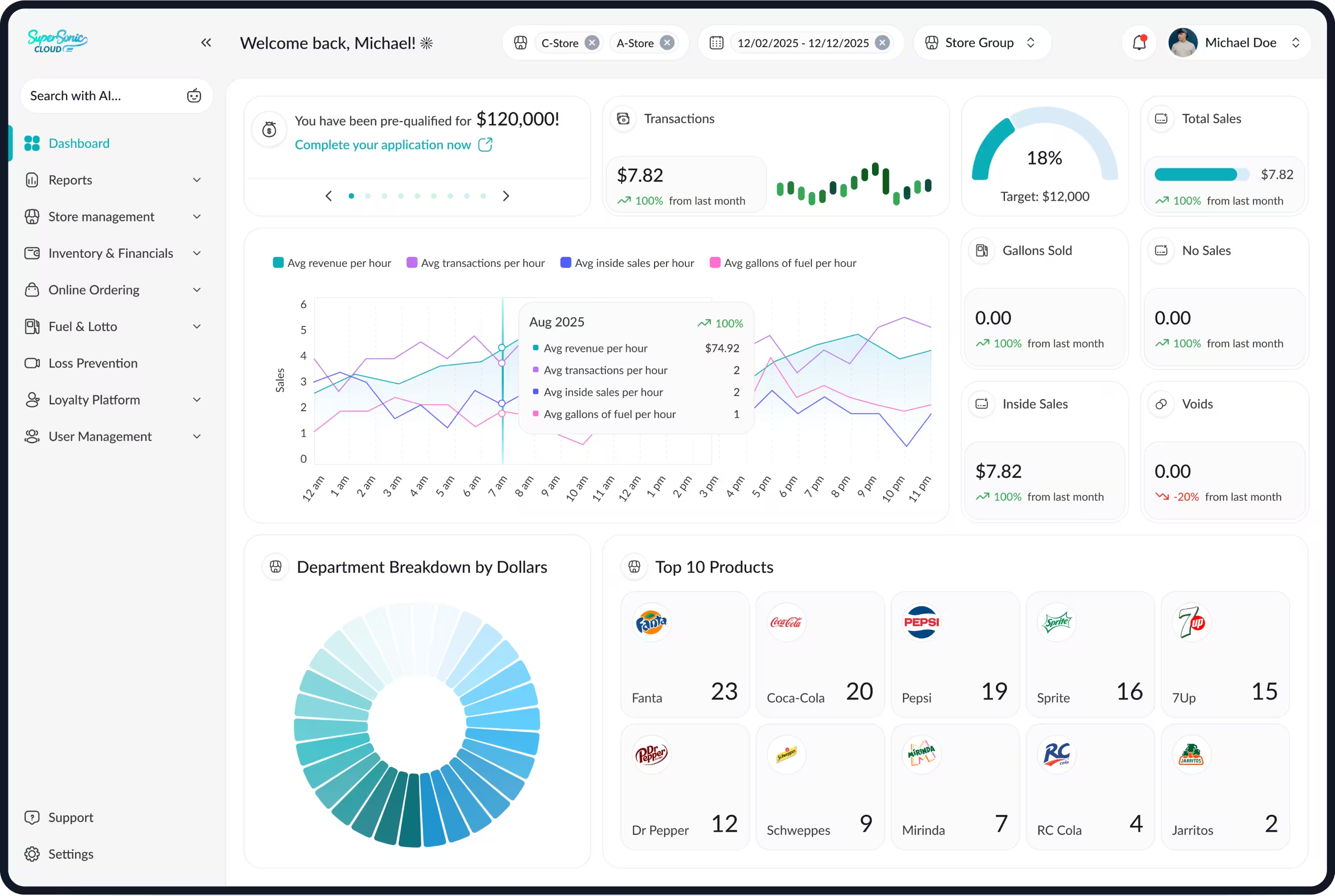
Built for businesses that process high transaction volume
A few cents may not look significant on one transaction.
Multiply it across thousands of transactions and the picture changes.
For convenience stores, grocery operators, liquor stores, QSRs, and other high-volume businesses, understanding payment costs becomes more important as transaction count grows.
SuperSonic gives merchants a connected way to monitor payment activity alongside sales and operational performance.
More volume should give you more information, not more confusion.
See the pattern. Understand the cost. Protect more of every sale.
A payment platform designed for clarity
You should not need to become a payments expert to understand how your business gets paid.
SuperSonic Pay keeps payment processing connected to the same broader platform that manages your POS, transactions, and reporting.
That gives you a clearer view of how payments fit into your business while giving you processing options designed around different operating needs.
Payments, POS, and reporting working together.
FAQs
SuperSonic POS is an all-in-one point-of-sale, payment processing, and cloud-based business management platform built by store owners, for store owners.
From processing transactions and managing inventory to tracking sales and reducing losses, SuperSonic brings everything you need to run your business into one connected platform.
With SuperSonic, you get more than a POS system. You get the tools, insights, and support to take control of your operations, make smarter decisions, and get more out of every store.
Whether you're running a single neighborhood store or managing multiple locations, SuperSonic is built to help businesses of all sizes operate smarter and grow.
Our platform supports convenience stores, gas stations, liquor stores, smoke and vape shops, grocery stores, supermarkets, quick-service restaurants, and specialty retailers.
Every business operates differently. That's why SuperSonic offers flexible hardware, integrated payments, and industry-specific tools designed to fit the way you work.
With SuperSonic, you can:
- Speed up checkout: Process transactions quickly and accept credit, debit, EBT, eWIC, OTC, and other supported payment methods.
- Take control of inventory: Manage products, pricing, purchase orders, and stock levels from one platform.
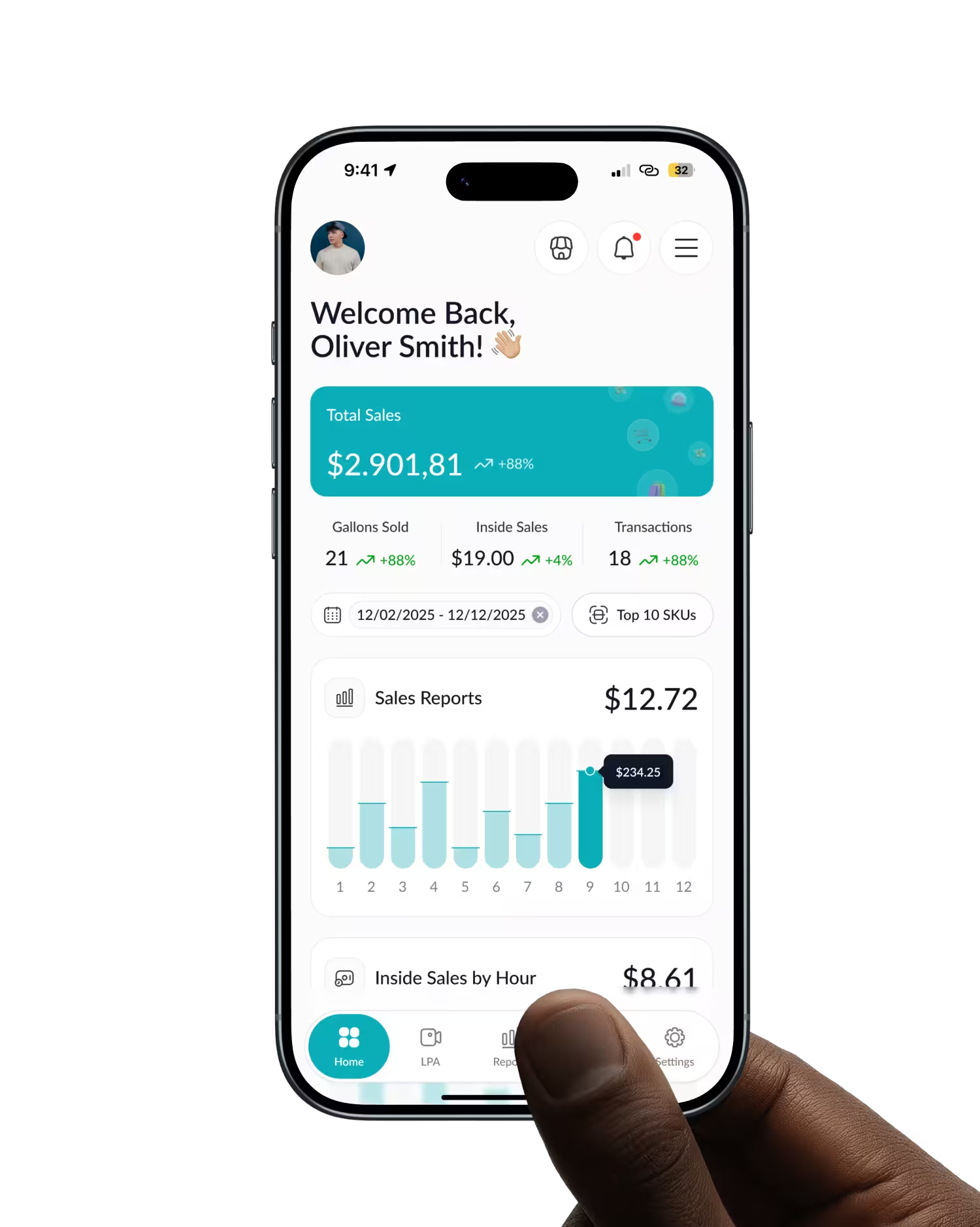
- Monitor your business from anywhere: Access real-time sales, reporting, and performance insights across one or multiple locations.
- Reduce losses: Identify suspicious transactions, monitor employee activity, and connect transaction data with security footage.
- Keep customers coming back: Build loyalty with rewards programs, gift cards, promotions, and customer engagement tools.
- Connect your operations: Manage online ordering, delivery integrations, and supported fuel operations without juggling disconnected systems.
From the checkout counter to the back office, SuperSonic helps you spend less time managing systems and more time growing your business.
Credit card processing fees are the costs a business pays to accept card payments. The total cost can include interchange paid to the cardholder's issuing bank, fees charged through the card networks, and pricing from the payment processor. The amount a merchant pays can vary based on the card, transaction method, pricing plan, and other factors.
An interchange fee is a fee associated with a credit or debit card transaction that is generally paid to the bank that issued the customer's card. Interchange rates vary based on factors such as card type, transaction method, merchant category, and other network-defined criteria. Interchange is one component of the total credit card processing fee, not the entire processing cost.
Start by understanding what you currently pay rather than comparing headline rates alone. Review your transaction volume, average ticket, payment methods, processing model, and any additional fees. Depending on your business, switching pricing structures or using a compliant Dual Pricing program may help reduce the processing costs your business absorbs. The right strategy depends on your actual transaction mix.
Fixed-rate processing charges the merchant a defined processing rate for eligible transactions, making costs easier to anticipate. Dual Pricing displays cash and card pricing and lets the POS apply the appropriate price based on how the customer pays. For eligible merchants, Dual Pricing can reduce the amount of card-processing cost the business absorbs while keeping the checkout calculation automated.

Ready to get more clarity into your payment costs?
Processing fees affect every card sale you make.
Understanding those costs is the first step toward choosing a payment strategy that better fits your margins, transaction volume, and customers.
Talk with a SuperSonic specialist about your current processing setup, how your business accepts payments, and which SuperSonic Pay option makes the most sense for your operation.