
Know exactly how much fuel is in your tanks
Fuel is one of the most valuable assets at your gas station. You should not have to rely on delayed reports or manual calculations to know how much of it you have.
SuperSonic connects with supported automatic tank gauge systems to bring tank levels, deliveries, fuel movement, and POS sales into one reporting environment.
See what is in each tank. See what was delivered. See how the numbers compare with what you sold.
No guesswork below the surface.
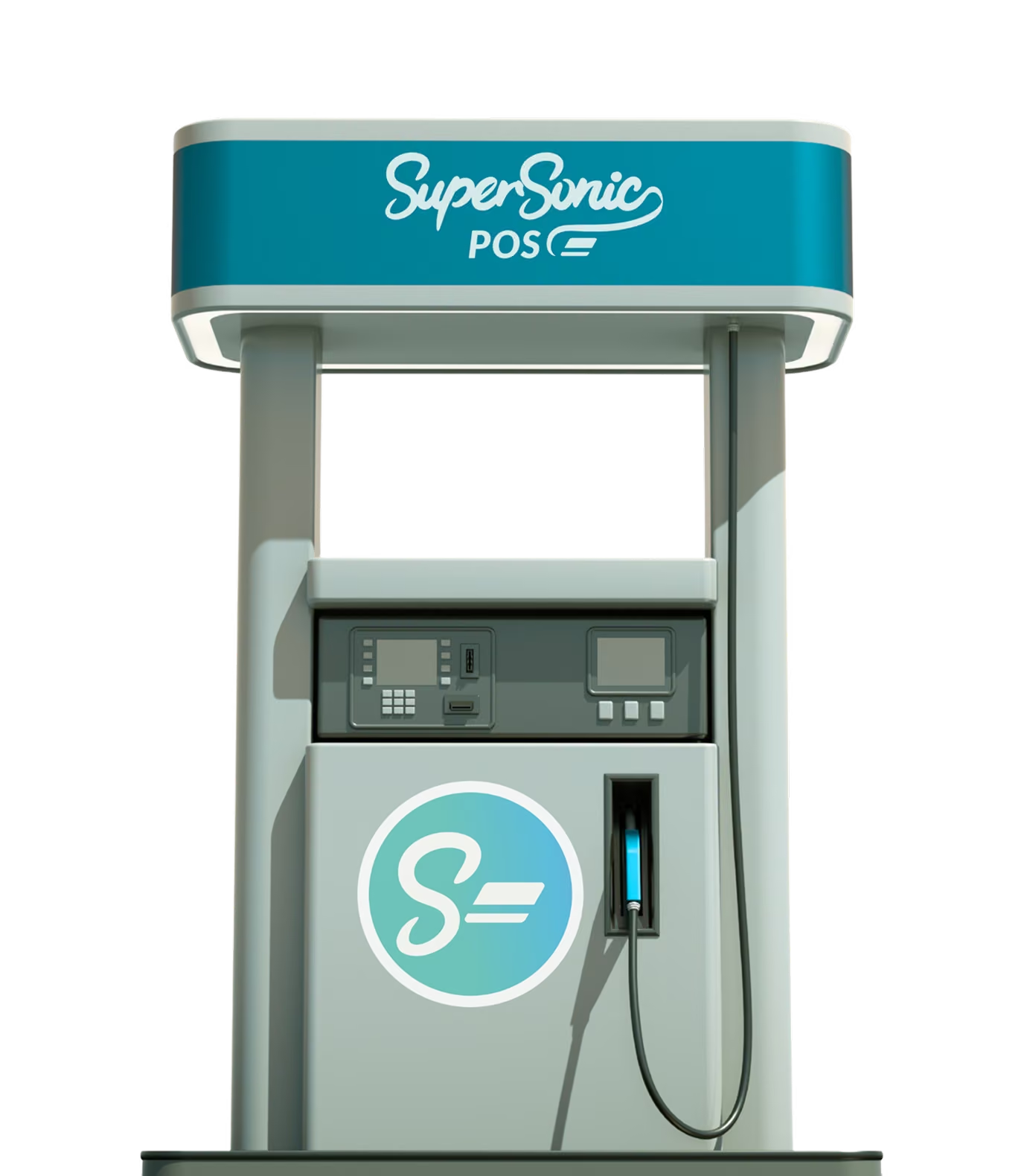
Fuel inventory should never be a guessing game
Every gallon recorded as sold should align as closely as possible with the fuel delivered to and measured inside your tanks.
When the numbers do not align, the cause could involve a delivery discrepancy, measurement variance, equipment issue, transaction error, or potential fuel loss.
Automatic tank gauges measure activity inside fuel-storage tanks throughout the day. SuperSonic connects supported tank information with the operational data already moving through your fuel POS.
Instead of manually combining tank readings, delivery records, and sales reports, you get a clearer view of how fuel moves through the site.
Better visibility. Tighter inventory control. Fewer unanswered questions.
Monitor tank levels in real time
Waiting for a manual tank reading makes it harder to plan deliveries and understand current fuel availability.
SuperSonic integrates with supported automatic tank gauge configurations to bring current tank information into your connected fuel environment.
Authorized operators can monitor information such as:


Current fuel volume by tank

Tank refill and delivery activity

Daily inventory movement

Fuel remaining before the next delivery
A discrepancy does not always prove that fuel was lost. It does give your team a reason to review the transaction, delivery, measurement, or equipment data more closely.
Reconcile fuel sales with inventory data
Fuel inventory changes every time a delivery enters a tank or a customer dispenses fuel.
When tank readings, dispenser activity, deliveries, and POS sales remain in separate systems, operators have to reconcile those records manually.
SuperSonic helps connect supported tank-gauge information with fuel sales and delivery data. Operators can compare opening vs. closing tank inventory, recorded fuel deliveries, gallons sold, and more.
A discrepancy does not always prove that fuel was lost. It does give your team a reason to review the transaction, delivery, measurement, or equipment data more closely.
Connect the records. Find the variance. Investigate sooner.
A connected view of your entire fuel operation
Tank monitoring creates more value when it is connected to the transactions and reports that explain why inventory changed.
SuperSonic brings supported tank-gauge information, forecourt activity, and POS sales into one fuel-management environment.
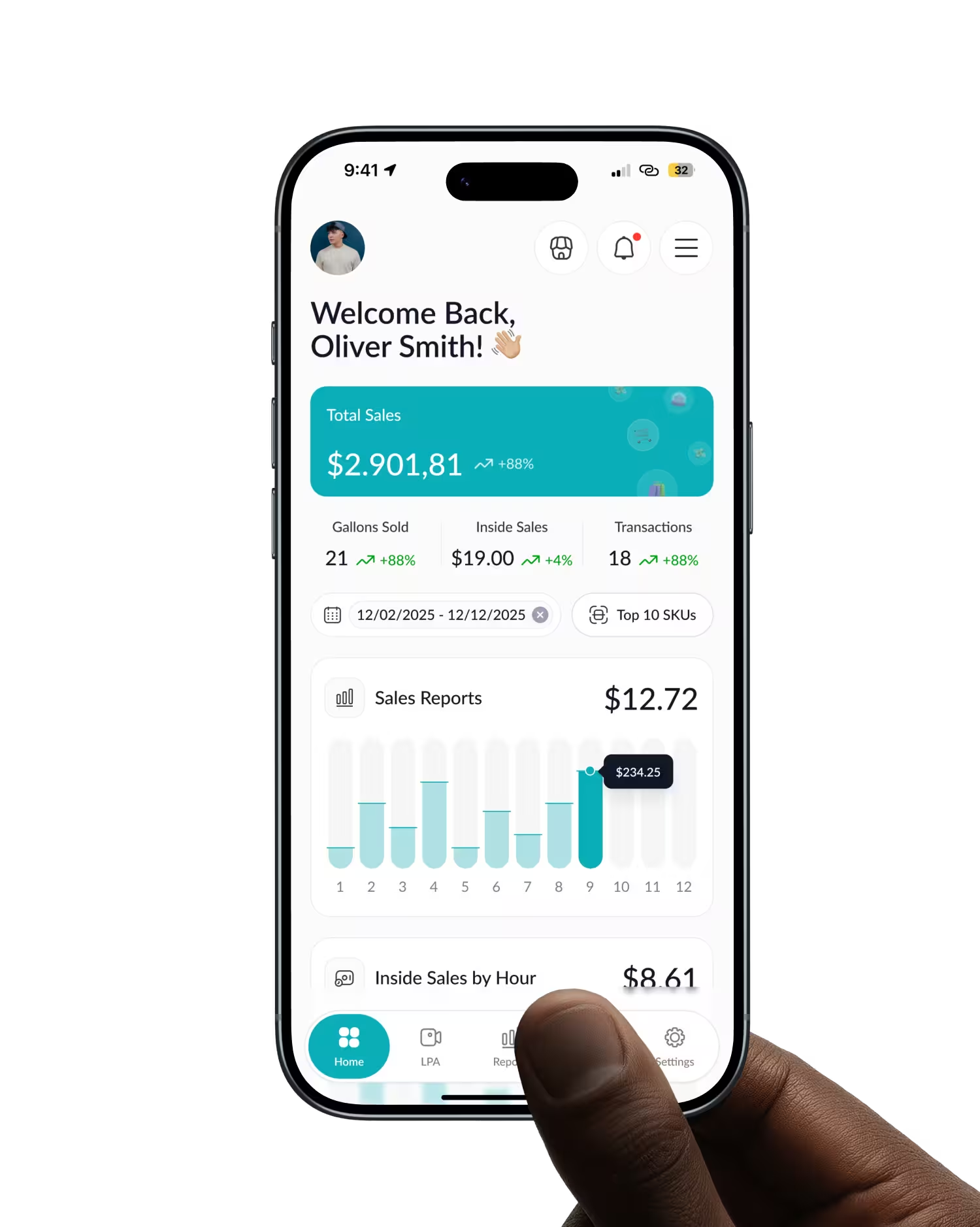
Operators can track tank activity, review inventory movement, compare sales with measured fuel, and investigate variances without rebuilding the entire picture in a spreadsheet.
What entered the tank. What left through the pump. What the business recorded.
Everything works together.
FAQs
Fuel inventory management software helps gas station operators monitor tank levels, deliveries, gallons sold, and inventory movement. When connected with an automatic tank gauge and fuel POS, it can compare measured tank activity with recorded sales and deliveries. This gives operators a clearer view of available fuel and any variance that may require investigation.
An automatic tank gauge, commonly called an ATG, uses an installed probe and monitoring console to measure conditions inside a fuel-storage tank. Depending on the equipment, it may report product level, volume, temperature, water level, deliveries, and tank conditions. SuperSonic connects with supported ATG configurations so relevant tank information can be viewed alongside fuel and POS activity.
Fuel reconciliation compares opening inventory, fuel deliveries, gallons sold, and closing measured inventory. The expected amount of fuel is then compared with the amount reported by the automatic tank gauge. Differences may result from measurement variation, delivery records, temperature changes, equipment issues, transaction discrepancies, or potential fuel loss. Connected reporting helps operators identify and investigate those differences.
No. Inventory monitoring can help operators identify unusual tank activity or fuel variance, but it does not automatically replace required release-detection tests, inspections, equipment maintenance, recordkeeping, or other regulatory obligations. Operators should follow the requirements that apply to their underground storage tanks and confirm that their monitoring equipment is properly configured and maintained.

Ready to see what is happening inside your fuel tanks?
You should not have to wait for a manual report to understand one of the largest assets in your business.
See how SuperSonic connects supported automatic tank gauge data with your forecourt, fuel sales, deliveries, and POS reporting.
Know what you have. Know what moved. Know when something needs attention.