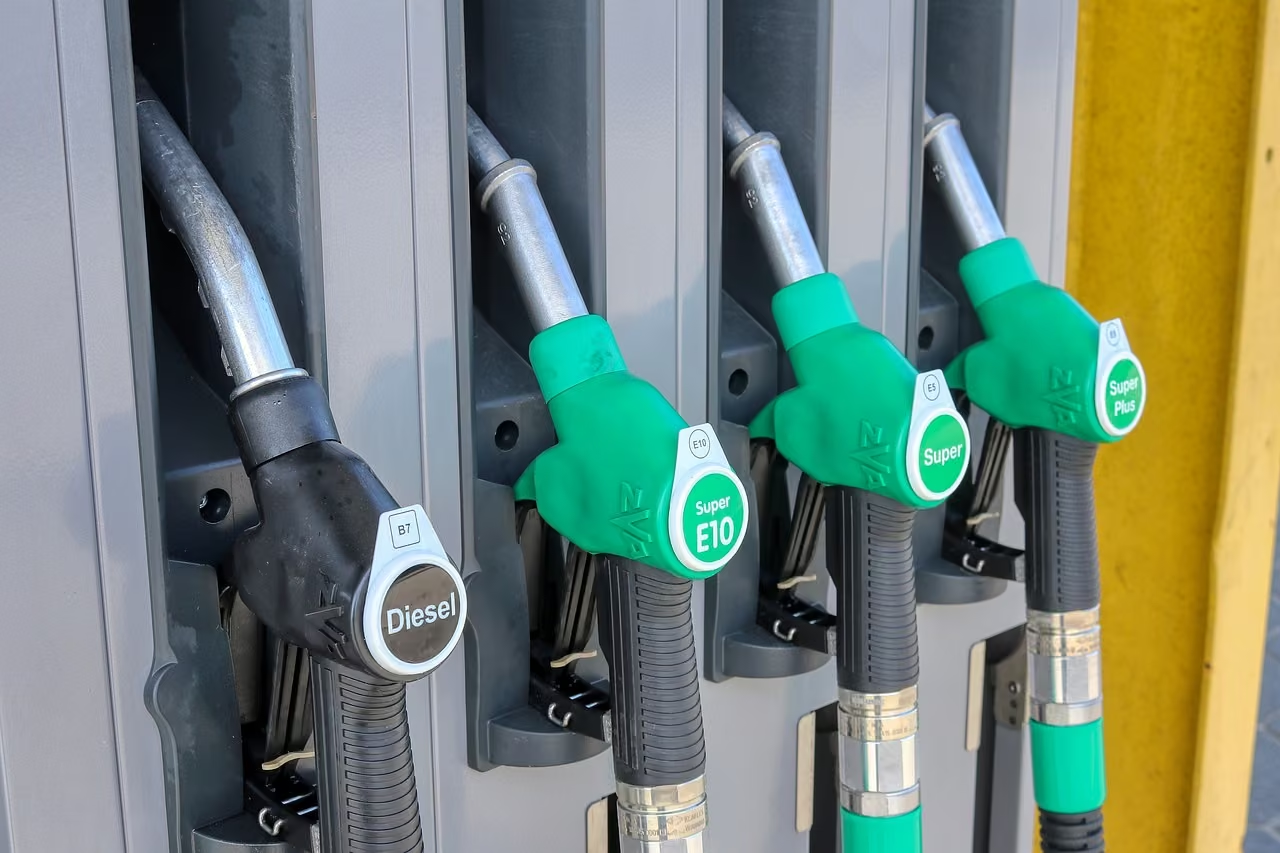
Ever thought about diving into the gas station business but felt lost on where to begin? Starting a business, especially a gas station, can be challenging, but this step-by-step guide can help steer you in the right direction.
Your Ultimate Guide to Starting a Successful Gas Station: From Dream to Reality
The oil and gas industry has reached impressive heights, and with millions of licensed drivers and roughly 100,000 gas stations in the United States, opening a gas station may represent a strong business opportunity. Because startup costs can be substantial, a solid business plan and access to financing are essential.
Step 1: Develop a Winning Business Plan
A comprehensive business plan can improve your chances of securing funding from lenders or investors. Key elements should include:
- Range of products and services: Detail what your gas station will offer beyond fuel, including snacks, beverages, car washes, and other services.
- Market research: Study competitors and tailor your marketing strategy accordingly.
- Prime location: Evaluate nearby competitors, accessibility, traffic patterns, and customer demand.
Step 2: Understand the Market
Before starting a gas station, research the competition and identify how your business can attract customers and increase profitability.
- What are your competitors’ strengths?
- What are their weaknesses?
- How can your business avoid those weaknesses?
- How can you solve customer problems better?
- Would nearby competitors pose a major threat?
- How can the location help bring in more customers?
Step 3: Choose the Right Location
Location strongly affects traffic and sales. Consider growing neighborhoods where residents may drive longer distances and need convenient fuel access. Avoid areas where large warehouse retailers sell fuel at heavily discounted prices unless the market can support the additional competition.
Step 4: Set Up the Business
Choose a legal structure that offers appropriate liability protection, such as a limited liability company or corporation. Register the business, select a unique name, and obtain the required permits and licenses.
- LLCs offer flexible taxation and may have lower administrative costs, making them attractive for smaller gas stations.
- Corporations may be more appropriate when raising investor capital or planning significant expansion.
- Contact your state’s Secretary of State office to understand registration paperwork, fees, and publication requirements.
Step 5: Choose a Unique Business Name
Check with your state’s Secretary of State and the United States Patent and Trademark Office to confirm that the desired business name is available. Also verify that a suitable domain name can be registered.
Step 6: Register for Taxes
Apply for an employer identification number through the IRS. Depending on state requirements, you may also need to register for a state tax identification number.
Step 7: Consider Buying a Franchise
A franchise such as Chevron or Mobil may provide an established brand and proven operating model, but it can also require royalties and contractual restrictions. Have a qualified business attorney review any franchise agreement before signing.
Step 8: Secure Adequate Funding
Financing may come from traditional bank loans, SBA loans, or private investors. The original guide estimates approximately $300,000 in startup costs, although actual costs vary substantially by property, location, construction, environmental work, equipment, inventory, licensing, insurance, staffing, and franchise requirements.
Step 9: Arrange a Gas Supplier Contract
Research wholesale fuel providers and compare rates, terms, delivery requirements, and fees. Franchise agreements may require a preferred supplier. A lawyer should review both franchise and supplier contracts before execution.
Step 10: Obtain Required Permits and Licenses
Requirements vary by state and municipality. Common permits and licenses may include:
- Fire and tank inspections
- Water-discharge permits
- Alcohol and tobacco licenses
- Restaurant-code compliance
- Motor-fuel outlet licensing
- Certificate of occupancy
Step 11: Obtain Business Insurance
Business insurance can help protect against risks such as burglary, employee injuries, equipment breakdown, environmental incidents, and property damage.
Step 12: Market the Gas Station
- Use visible pole signs and highway-exit signage where permitted.
- Maintain strong customer service and clean facilities to encourage favorable online reviews.
- Create a loyalty program to improve retention.
- Consider food-service partnerships that make the location more useful as a rest stop.
- Use competitive fuel pricing strategically to attract customers who may also purchase convenience-store items.
- Install sufficient pumps to reduce wait times and improve accessibility.
Step 13: Understand Daily Operating Responsibilities
- Establish operating hours and decide whether overnight staffing is appropriate.
- Open reliably and prepare for high-traffic periods.
- Monitor inventory, schedule deliveries, and organize products.
- Implement security measures, including surveillance, reinforced entry points, cash-handling controls, and regular deposits.
Conclusion: Turn Your Entrepreneurial Plans into Reality
Starting a gas station can be a strong business opportunity, but it requires careful planning, substantial investment, regulatory compliance, and disciplined daily management. Market research, location selection, financing, supplier relationships, permitting, insurance, customer service, and security all influence long-term success.
With the right preparation and consistent execution, an entrepreneur can build a gas station that serves local demand while generating revenue from both fuel and convenience-store products.